Trade · 6 min read
Why waterproofing fails on UAE villas and podiums
Most leaks we are called to are not a mystery. The membrane was patched, the outlet was moved, or the upstand was never detailed. Heat and ponding did the rest.
By the Beavcon engineering team Published Updated Reviewed by the Technical Manager Registered with the Society of Engineers UAE and Abu Dhabi Municipality
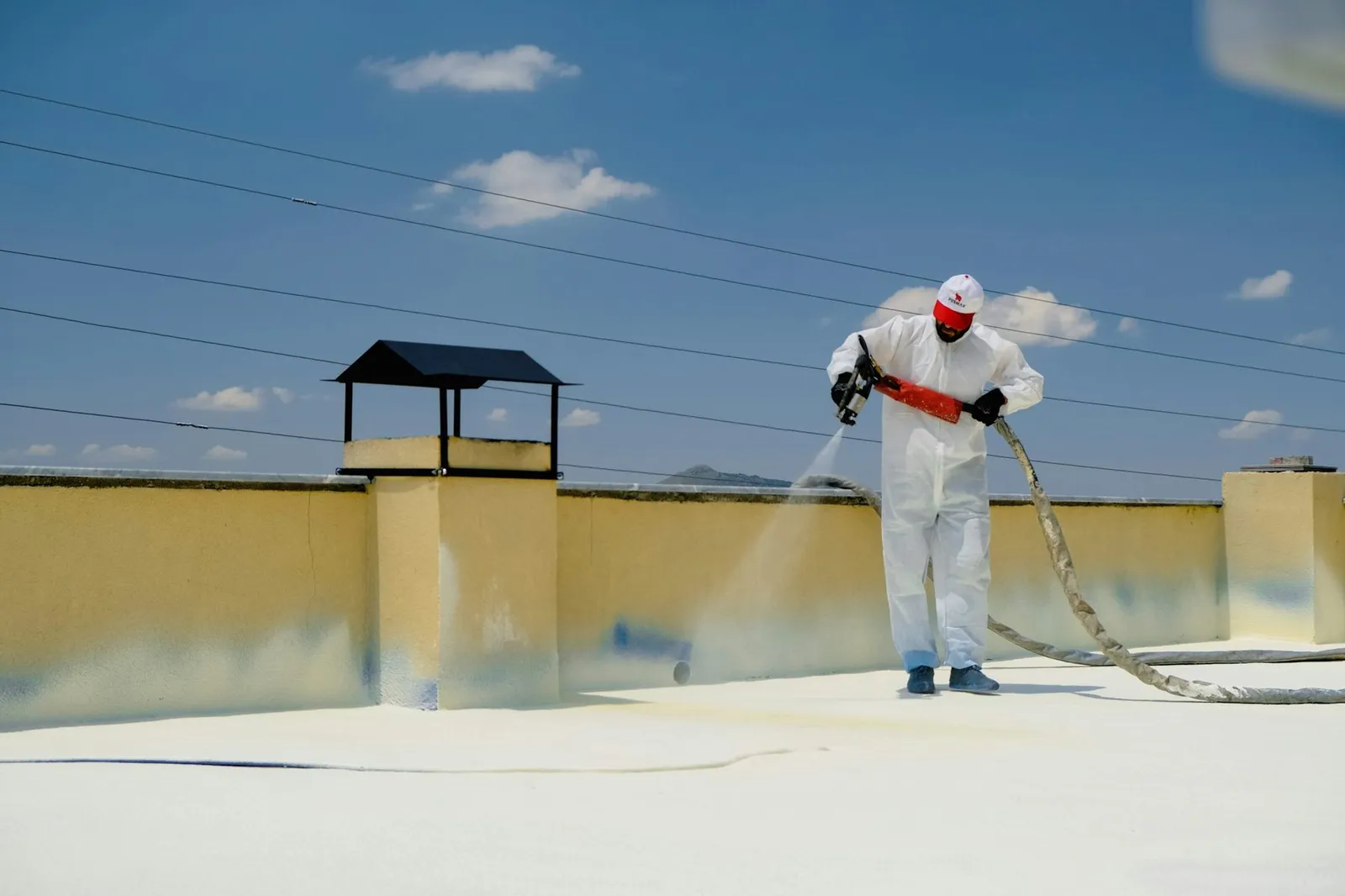
Waterproofing in the UAE fails in predictable places: bathroom floors, shower upstands, roof outlets, podium planters and the junction between a new wet area and an old slab. Heat, UV and ponding after a winter storm do not create the defect. They find it.
A waterproofing contractor who only “paints a coat” over the last leak is selling a second visit. This is how we decide whether to patch or replace, and what has to be in the RFQ.
The failures we see most often
Tile-over-tile on a failed wet area. The membrane underneath is already split or missing at the waste. New tiles lock the leak in. The ceiling below tells you six weeks later.
Roof coatings on a dirty or ponding substrate. A coating on dust, laitance or standing water is not a membrane. Outlets that sit above the finished level guarantee ponding. The UAE sun then cooks the coating at the puddle edge.
Unfinished upstands and penetrations. Pipes, AC stands, parapet flashings and door thresholds are where water enters. A floor field that passed a flood test can still leak at a sleeved pipe that was never booted.
Planters and podium decks without a protection layer. Root barriers and drainage cells are not decorative. Without them the membrane is the walking surface for the next landscaping crew.
Movement at junctions. Villa extensions, roof plant plinths and podium-to-tower joints move. A rigid coating across that joint cracks on the first season.
When a patch is honest, and when it is not
A patch is honest when the leak is local, the existing membrane can be proven, and the repair can be flood-tested in isolation — for example a single outlet or a cracked upstand on an otherwise sound roof.
A patch is not honest when:
- The original system cannot be identified
- There are multiple leak points on the same floor or roof
- The wet area is being fully retiled
- The roof outlets or falls are wrong
- There is no access to test the repair
In those cases the membrane comes out to a sound substrate, a specified system goes down, and the hold point is a flood test before finishes. That is slower than a coating visit. It is the only sequence that belongs in a villa renovation or building refurbishment contract.
What belongs in a waterproofing RFQ
- Photos of the leak, the ceiling below, the roof or wet area, and the outlets
- Whether you want a local repair or a full wet-area / roof replacement
- Access (occupied villa, live community, restricted roof)
- Any existing warranty or previous contractor’s system, if you have it
- Whether finishes (tiles, paving, landscaping) are in this contract or a later one
Do not ask five contractors to “stop the leak” with no photos and no decision on replacement. You will get five incompatible products and no one who will flood-test.
How we hold the work
Beavcon treats waterproofing as a documented hold point: substrate, specified membrane, detailing at outlets and upstands, flood test, then finishes. Roof epoxy and wet-area works on live villa communities — including parking and roof packages in Mudon — are programmed around occupied access, not around a one-day coating slot.
Upload photos and the scope with work type Waterproofing, or request a site visit from Contact. We will tell you if a patch will hold before we price a replacement you do not need.