Comparison · 9 min read
Multi-trade fit-out contractors Dubai: how to compare them for an office refurbishment
How to compare multi-trade fit-out contractors in Dubai for an office refurbishment: self-performed trades, single accountable engineer, live-building evidence and the close-out file to ask for.
By the Beavcon engineering team Published Updated Reviewed by the Technical Manager Registered with the Society of Engineers UAE and Abu Dhabi Municipality
A multi-trade fit-out contractor in Dubai is a single licensed contractor that takes contractual responsibility for the coordinated delivery of several trades in an office refurbishment: partitions and ceilings, electrical, HVAC, plumbing and drainage, firefighting modifications, finishes, and often aluminium and glass. Instead of the client or consultant holding separate contracts with a joiner, an electrician, an AC contractor and a painter, one contractor manages the interfaces, the programme and the documentation.
When you compare multi-trade fit-out contractors Dubai, you are really comparing how each one controls the points where trades meet: who self-performs which package, who is the single accountable engineer, how the contractor manages landlord and authority approvals in a live building, and what evidence it can show from a similar occupied office.
What is a multi-trade fit-out contractor?
A multi-trade fit-out contractor is not a main contractor in the shell-and-core sense, and it is not a labour supplier. It is a contractor that can price, sequence and deliver the interdependent trades inside a commercial floor plate under one contract. For an office refurbishment, that typically includes demolition and strip-out, gypsum partitions, ceilings, electrical containment and lighting, HVAC modifications, firefighting alterations, plumbing and drainage, doors, glazing, painting and floor finishes.
The distinction matters because office refurbishment problems rarely sit inside one trade. A ceiling change affects the lighting layout, the HVAC diffusers, the fire detection coverage and the acoustic treatment. A new meeting room affects the cooling load, the power and data positions, the partition line and the door swing. If each trade is contracted separately, the client or the consultant becomes the integrator. A multi-trade contractor moves that integration into one contract, with one programme and one set of inspection records.
In Dubai, the practical test is not whether a company lists ten trades on a website. It is whether the contractor can show who physically performs the critical trades, who engineers the interfaces, and who signs the documentation when the work is inside an occupied tower with landlord rules and authority approvals on the critical path.
How do I compare multi-trade fit-out contractors for an office refurbishment?
Compare them on five points: self-performance, engineering control, approvals management, live-building evidence and close-out documentation. A contractor can be strong on one and weak on the others, so the comparison should be side by side, not a single score.
1. Which trades does the contractor self-perform?
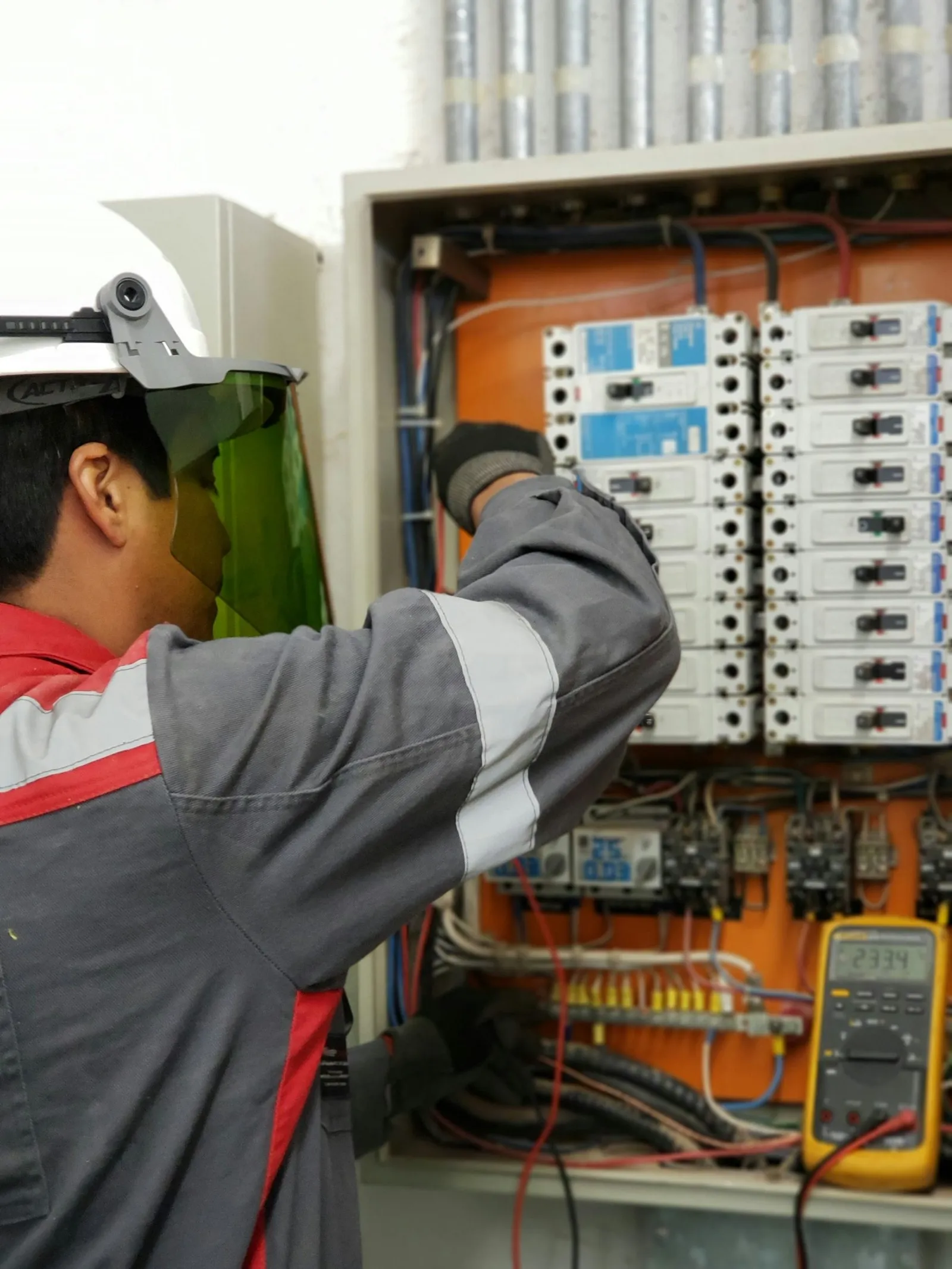
Ask for a trade-by-trade list: which packages are delivered by directly employed engineers and technicians, and which are subcontracted. Self-performance is most valuable on the trades that carry the most interface risk: electrical, HVAC, plumbing and drainage, and firefighting modifications. If those are subcontracted, ask who supervises the subcontractor, who checks the drawings before installation, and who is accountable when a duct clashes with a cable tray.
A controlled subcontractor panel is normal for specialist packages such as fire alarm programming or automated glass. The question is not whether subcontractors exist; it is whether the contractor controls them under one contract rather than passing the coordination risk back to the client.
2. Who is the single accountable engineer?
Ask for the name and role of the engineer who will review the drawings, materials and execution requirements before installation starts. On a multi-trade office refurbishment, that person should be able to read the electrical, HVAC and firefighting drawings together, not only the architectural set. If the answer is a project manager with no engineering support, the coordination risk sits with the site team and gets discovered during installation.
3. How are landlord and authority approvals managed?
In an occupied Dubai tower, the landlord fit-out guide, the master developer and the relevant authority each impose requirements that vary by building and free zone. Ask the contractor to explain the approval sequence for the specific building: who submits the fit-out drawings, who books the goods lift, who arranges the authority inspections, and what happens when the landlord requests a revision. A contractor that has delivered a similar floor in an occupied tower will answer with the sequence, not with a general assurance.
4. What live-building evidence can the contractor show?
Two references from office refurbishments inside occupied buildings are worth more than ten references from empty shell-and-core sites. Ask for the building type, the floor, the trades delivered, and the constraint that actually shaped the programme: occupied floors above and below, restricted working hours, goods-lift bookings, or authority inspections on the critical path.
5. What does the close-out file contain?
Ask to see a redacted handover file from a completed office fit-out. It should contain inspection records, material submittals, snag closure and completion documentation, not only a final invoice. A contractor that cannot show a structured close-out file is unlikely to produce one for your project.
What evidence should a contractor show for a live-building office refurbishment?
The evidence should be specific and checkable. Use this checklist when you meet a shortlisted contractor:
- Trade-by-trade self-performance list, with named subcontractors for any specialist packages
- Name and role of the accountable engineer who reviews drawings before installation
- Two live-building office references with the building type, floor and constraint stated
- A redacted close-out file from a completed office fit-out, including inspection and snag records
- The approval sequence for the specific building: landlord, master developer and authority steps
- A sample programme showing how occupied-floor restrictions and goods-lift bookings are sequenced
- The contractor’s trade licence, ISO certificates and any relevant registrations
- A written explanation of how variations and commercial changes are documented
Do not accept a portfolio of photographs as a substitute for the close-out file. Photographs show finishes; the file shows whether the contractor could prove the work was inspected, snagged and closed.
How do I verify a contractor’s licence and ISO certificates?
Start with the trade licence. Ask for the licence number and the legal name on the licence, then check that the legal name matches the name on the quotation and the contract. For a mainland company in Dubai, the licence is issued by the Department of Economy and Tourism (a free-zone company holds a licence from its free zone instead), and the activity description should cover building contracting or fit-out works rather than an unrelated activity. A contractor that is registered with the Society of Engineers UAE or with Abu Dhabi Municipality can show the registration certificate, and you can ask for the registration number and the registered engineer’s name.
ISO certificates should be checked against the certifying body and the certificate scope. Ask for the certificate number and the issuing body, then confirm with the issuing body that the certificate is current and that the scope covers the trades you are buying. A certificate that lists only consultancy or trading activities does not cover installation work. The same check applies to any registration with a government housing programme or a master developer: ask for the registration reference and confirm it with the issuing body before you rely on it.
How do I compare programme proposals between contractors?
Ask each contractor for a sample programme from a similar occupied office refurbishment, not a generic bar chart. Look for the same things in each one: the sequence of strip-out, first-fix MEP, partitions, ceilings, second-fix and finishes; the hold points for landlord and authority inspections; and the way the programme treats occupied-floor restrictions such as goods-lift bookings and working hours. A programme that shows all trades running in parallel with no inspection hold points is less credible than one that shows the actual sequence and the constraints that shaped it.
When you compare two programmes, compare the logic, not only the end date. Ask why a trade starts when it does, what happens if a landlord approval is delayed, and which activities can move without affecting the completion date. The programme is a planning document, but it is also a test of whether the contractor understands the building you are working in.
Why the single-contract model changes the comparison
A multi-trade contractor is only valuable if the single contract is engineered, not just administered. The comparison should therefore test the contractor’s model, not only its price. Ask how the contractor freezes the scope before commencement, how it documents variations, and how it tracks the programme when a landlord approval is delayed.
How Beavcon handles this
We treat a multi-trade office refurbishment as one engineered package, not a collection of trade orders. Our delivery model is built around a controlled subcontractor panel under one contract, with qualified engineers reviewing drawings, materials and execution requirements before installation. The scope, exclusions and responsibilities are defined before commencement, and commercial changes are documented rather than left ambiguous.
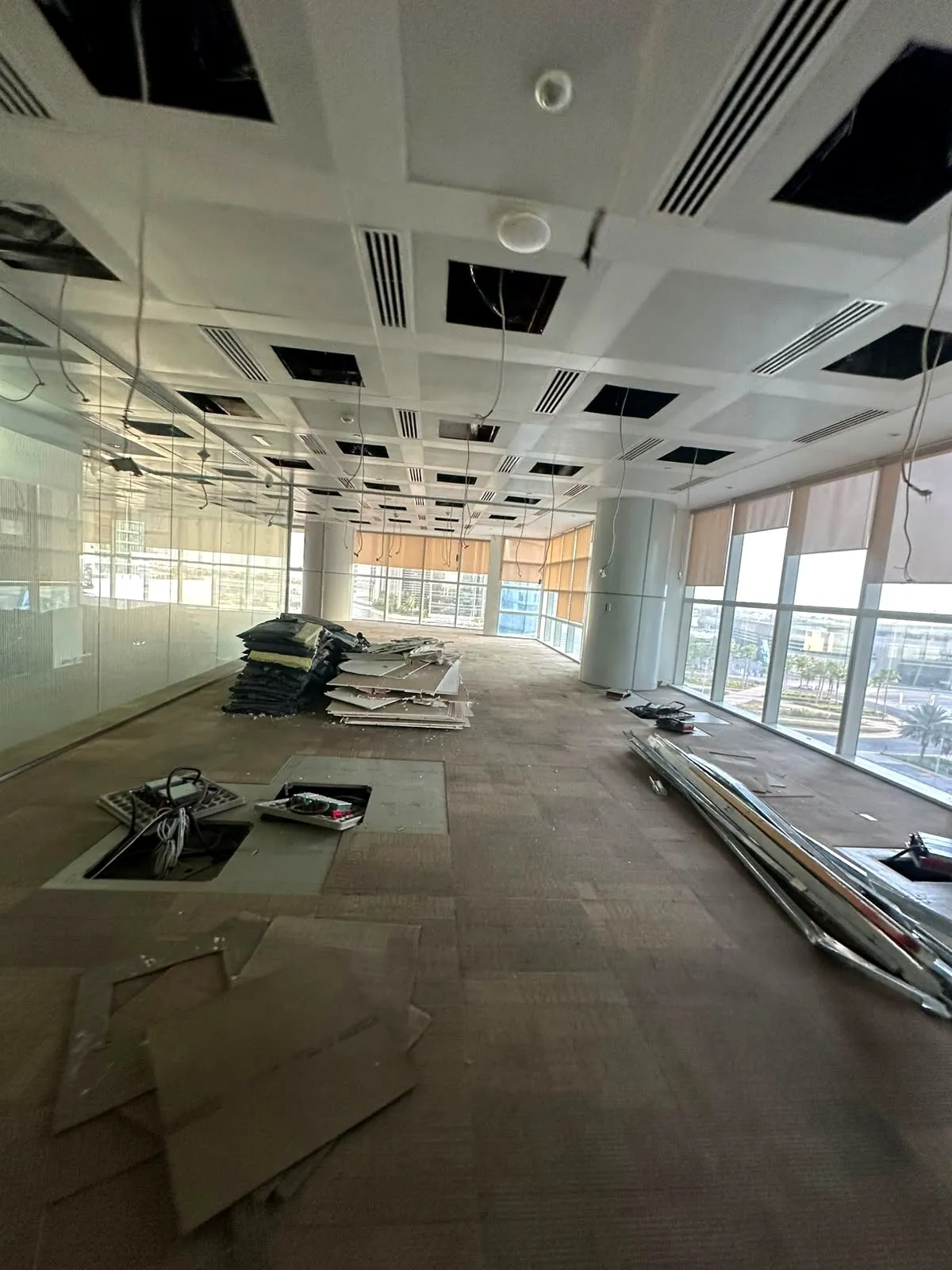
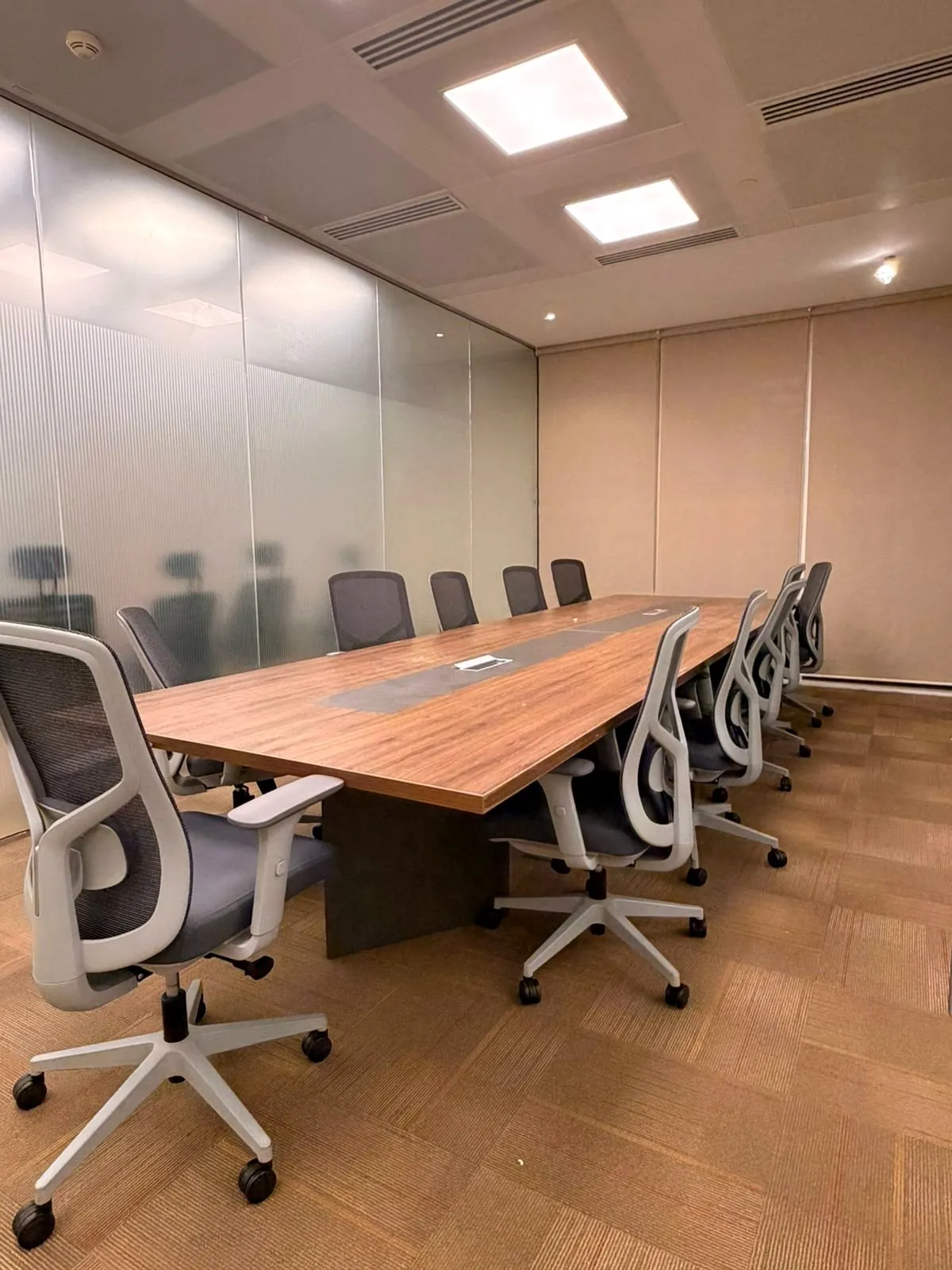
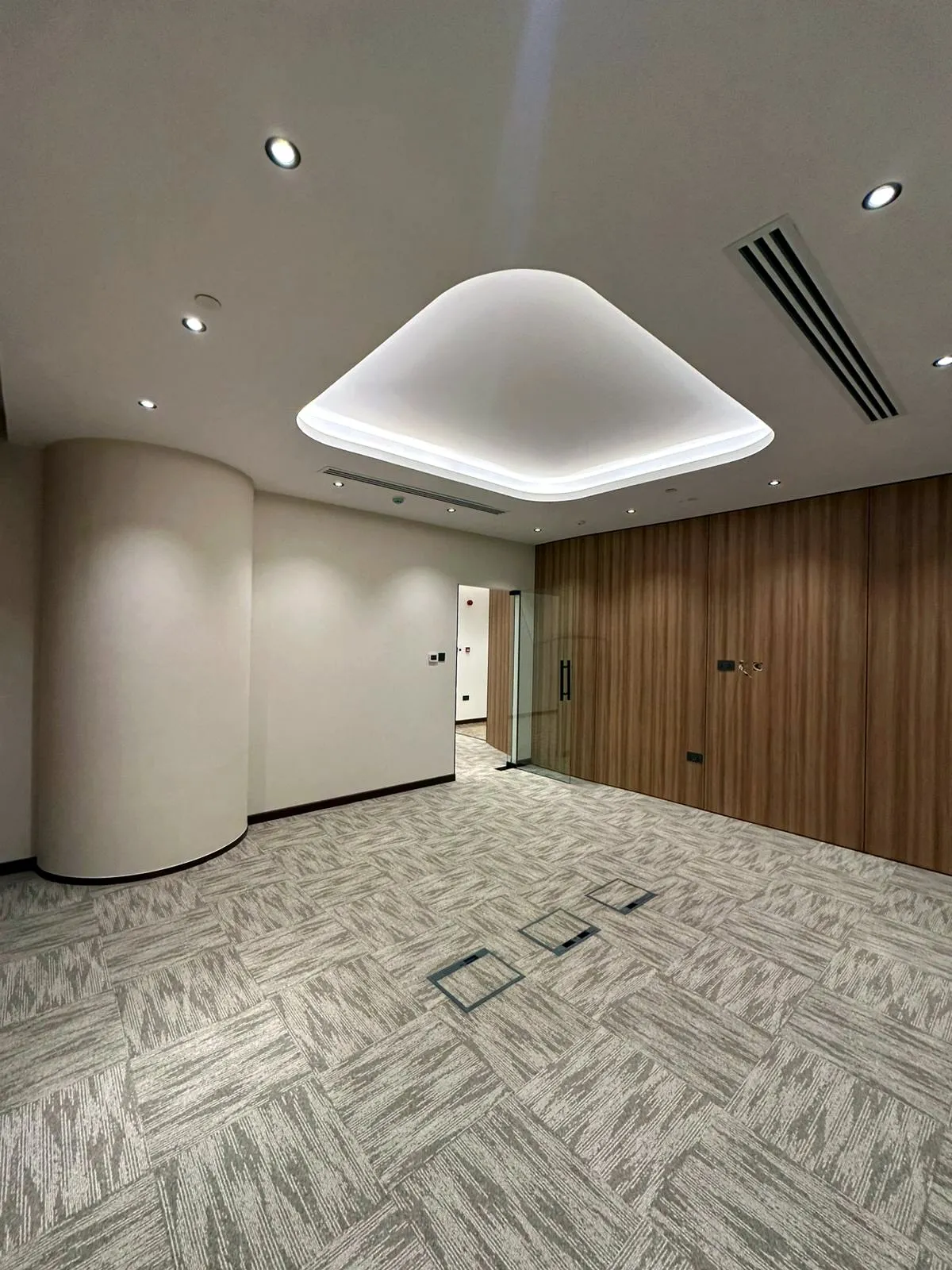
We hold ISO 9001:2015, ISO 14001:2015 and ISO 45001:2018 certifications, and our technical manager is registered with the Society of Engineers UAE and with Abu Dhabi Municipality. On the ADNEC Tower second-floor fit-out in Abu Dhabi, we delivered demolition, partitions, specialty ceilings, electrical and HVAC, firefighting, automated glass, furniture and carpet inside an occupied tower, with consultant and authority approvals on the critical path. The same coordinated multi-trade model is now being applied to the fourth floor of the same tower, where the package is in progress under the same occupied-tower constraints.
For a buyer comparing contractors, the practical next step is to upload the drawings, the landlord fit-out guide and the existing services information through BuildScope. A frozen scope and readable drawings let us return a qualified technical-commercial proposal within 48 hours for standard packages. If the building is occupied, request a site visit through our contact page so the constraints can be confirmed before pricing.
For more on the approval and documentation side, read our guide to documented close-out for occupied-building fit-out in Dubai and our piece on fit-out in an occupied tower: what actually delays the programme. If you are still deciding between contracting models, our comparison of a single contractor vs separate trades for Dubai refurbishment sets out the trade-offs.
Related service: Commercial Fit-Out.
General guidance; confirm requirements with the relevant authority or your consultant.