

Comparison · 6 min read
Robotics construction Dubai contractor quality control: what developers should ask
Robotics and automation are entering Dubai construction, but quality still depends on engineering control. Here is what to ask contractors about scope, inspection and programme before you tender.
By the Beavcon engineering team Published Updated Reviewed by the Commercial & QS Estimating, variations and documented cost control
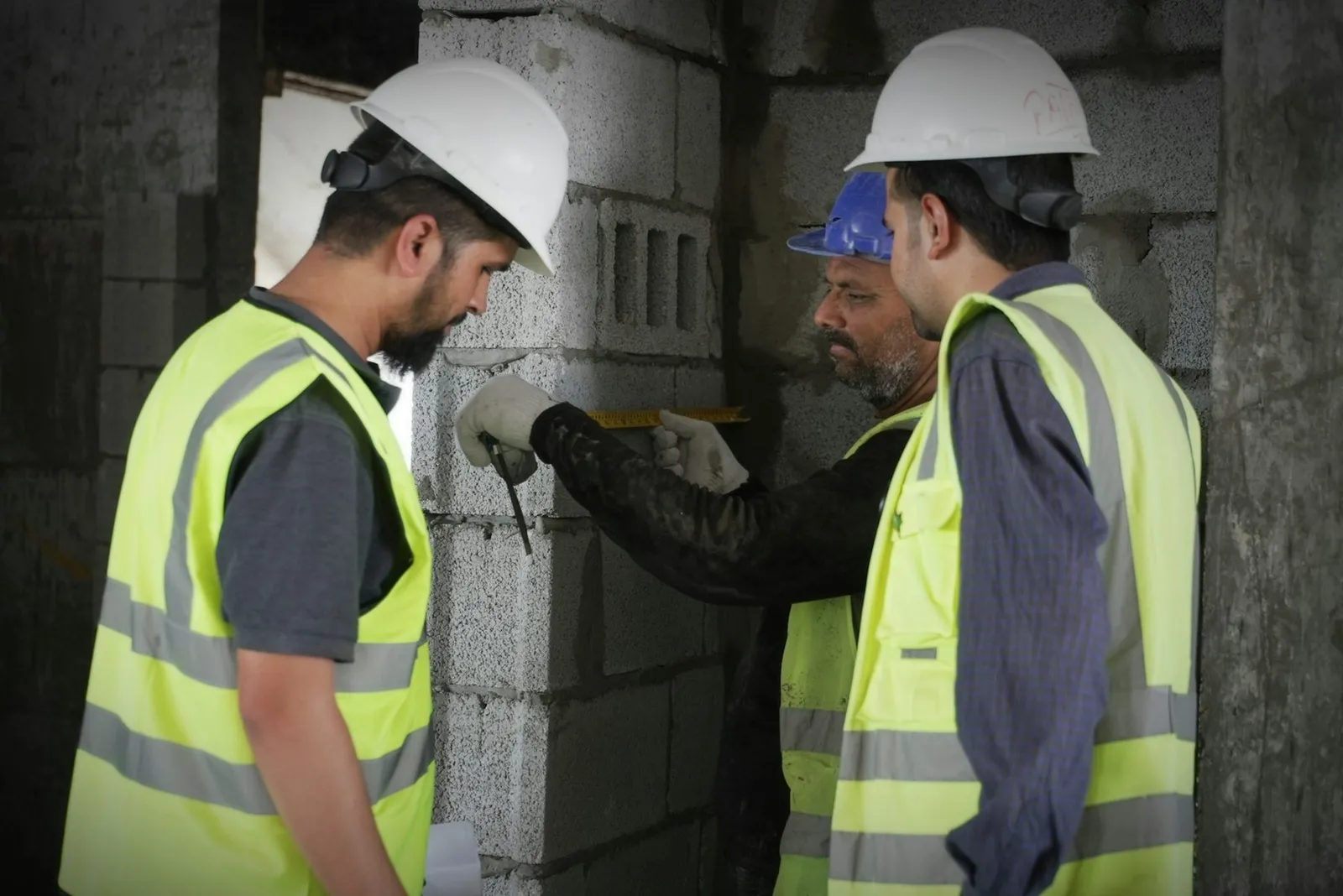
Robotics-led construction in Dubai is moving from announcement to tender question. Developers should not ask whether a contractor has heard of automation; they should ask what the contractor will still verify, inspect and document when robots, scanning tools or automated equipment are used on civil and finishing packages. The useful question is not “do you use robots” but “what does your quality control look like when part of the work is automated”.
Arabian Business reported that Fakhruddin Properties has unveiled an AED700m robotics-led mixed-use development in Dubai, and Construction Week reported that Dubai’s robot surveyor cuts surveying costs by 90% and customer waiting time by 472 days. Those headlines matter, but they do not remove the need for contractor-level engineering control on site. A robot can set out, scan or place material faster; it cannot own a snag, a non-conformance or a handover file.
Do Dubai contractors use robots for concrete and civil works?
Some do, but adoption is uneven and package-specific. What is visible in the market today is more likely to be surveying automation, scanning, digital setting-out, automated total stations and controlled equipment for repetitive tasks than fully autonomous construction across an entire site.
For civil works, the realistic applications are:
- automated surveying and as-built capture
- digital setting-out for concrete, blockwork and services
- machine control for excavation and levelling where the ground conditions allow it
- scanning for progress verification and clash detection
- robotic or semi-automated equipment for repetitive finishing tasks
A civil works contractor in Dubai may use automated survey equipment on one package and conventional methods on another. The decision is usually driven by repetition, access, tolerances and whether the consultant and authority accept the digital record as evidence.
What developers should check is not the tool brand but the output. Ask how the contractor records as-built positions, how deviations are flagged, and whether the survey data feeds the inspection and close-out file. Automation without that link is just faster measurement.
What quality control does a robotics-led build still need from the contractor?
The same control points remain, but some move earlier. Robotics can reduce human error in repetitive tasks, yet it introduces new failure modes: calibration drift, incorrect model inputs, sensor limitations in heat or dust, and over-reliance on a digital model that does not match site conditions.
A practical quality-control checklist for a robotics-led package looks like this:
- Confirm the digital model or setting-out data is the approved construction issue before work starts.
- Define tolerances in the RFQ, not after the first pour or installation.
- Require calibration and verification records for automated survey or setting-out equipment.
- Keep a human engineering hold point before concrete, waterproofing and concealed work.
- Require as-built scans to be checked against the approved drawings, not accepted as automatically correct.
- Agree how non-conformances are recorded, corrected and closed out.
- Include the digital record in the handover file alongside inspection requests and material approvals.
None of this is anti-automation. It is the same discipline a contractor should apply to any tool. At Beavcon, we treat setting-out and concealed work as hold points whether the measurement is manual or automated. On packages such as civil works, the value of automation is only realised when the data is checked by an engineer who understands the structure, the sequence and the authority requirements.
Should I specify robotics in my Dubai construction RFQ?
Only if it serves a measurable outcome. Specifying a technology for its own sake can narrow the bidder list, inflate cost and create an approval burden without improving the build.
A better approach is to specify the outcome and ask bidders to state their method. For example:
- “Setting-out and as-built records to be produced digitally where practical.”
- “Progress verification by scan or survey at agreed stages.”
- “Automated methods may be proposed where they improve repeatability or reduce rework.”
Then ask each bidder to confirm which operations will be automated, which will remain manual, and how quality control changes. That gives you a comparison without forcing a method that may not suit the site.
If you do want robotics named in the RFQ, keep it tied to deliverables. The question is not “will you use robots” but “what tolerance, record and inspection evidence will you provide”. A contractor who cannot answer that will not be saved by automation.
How does automation affect my civil works programme?
It can compress certain activities, but it rarely compresses the whole programme. Surveying, setting-out and as-built capture can become faster and more consistent. Repetitive tasks can move more predictably. However, approvals, curing, access, authority inspections and handover still run on calendar time.
For a Dubai civil package, the programme benefit usually appears in:
- fewer setting-out errors and less rework
- faster progress verification
- clearer as-built records for consultant review
- earlier identification of clashes before concrete or services are fixed
The risk is that automation creates data faster than the project can absorb it. If the contractor cannot review, approve and act on the scan or survey output, the programme gain is lost in coordination delay.
Ask the contractor to show where automation shortens an activity and where it does not. A credible programme will still show curing, inspection and close-out as fixed durations. If the programme assumes automation removes those, question it.
How Beavcon handles this
We apply the same engineering control to automated and conventional methods. The tool changes; the hold points do not. On projects such as Khalifa University, where work was carried out on an operating campus, the constraint was not the measurement method but the coordination, safety and documentation required around every activity.
For civil and multi-trade packages, we review the model or setting-out data against the approved drawings before installation, keep inspection records for concealed work, and build the as-built and close-out file as the work proceeds. If a client or consultant proposes automated survey or scanning, we integrate it into that control process rather than treating it as a separate technology exercise.
That matters because Dubai developers are not buying robots. They are buying a completed structure, a clean inspection record and a handover file that stands up to consultant and authority review. The contractor’s job is to make sure the automation serves those outcomes.
If you are tendering a civil or mixed package and want to test how bidders handle robotics and quality control, upload the scope through BuildScope or request a site visit. Ask for the method statement, the inspection plan and the digital record workflow in the same RFQ.
General guidance; confirm requirements with the relevant authority or your consultant.