Comparison · 8 min read
Risks of Separate MEP and Civil Contractors in Dubai
Separate MEP and civil contractors split responsibility at the exact points where Dubai fit-outs fail: interfaces, approvals, programme and close-out. This comparison shows what changes when one contractor carries both.
By the Beavcon engineering team Published Updated Reviewed by the Technical Manager Registered with the Society of Engineers UAE and Abu Dhabi Municipality
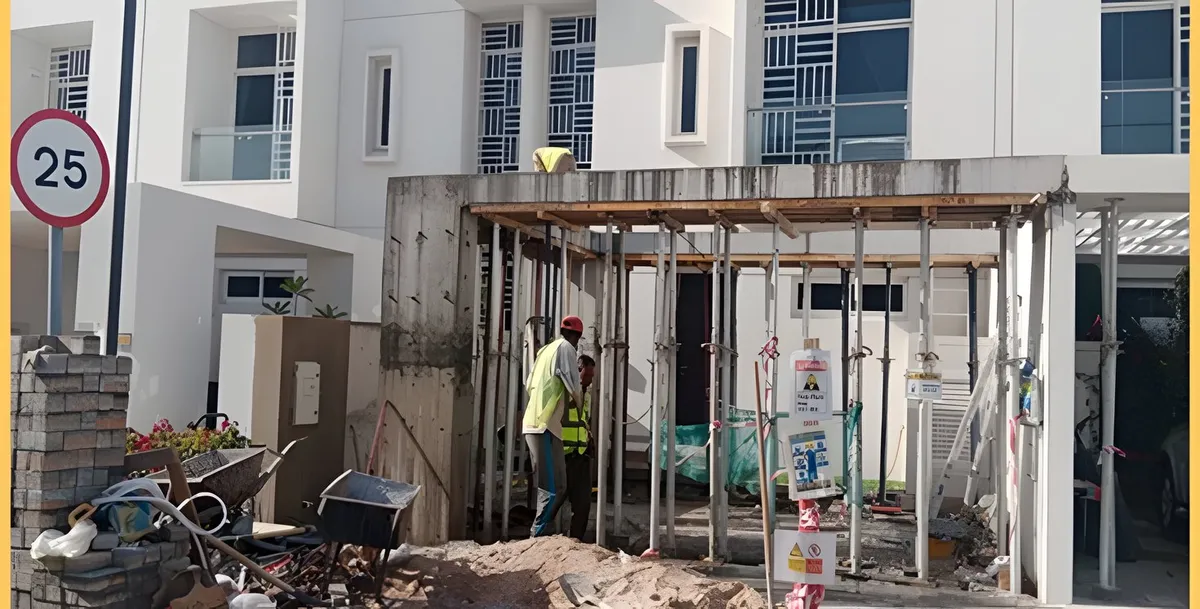
The core risk of hiring separate MEP and civil contractors in Dubai is that the buyer inherits the interfaces. Civil work sets the openings, levels, fire-rated enclosures and access routes that MEP installation depends on, and MEP work sets the sleeves, block-outs, loads and clearances that civil finishing depends on. When two contractors each deliver to their own scope, the gaps between those scopes become the client’s problem: who cuts the opening, who makes good after the duct is in, who owns the failed inspection, and who pays for the delay. One accountable multi-trade contractor removes that gap by carrying both scopes under one contract, one programme and one close-out file.
What are the risks of hiring separate MEP and civil contractors?
Separate contracts look simpler on paper: each contractor is responsible for their own trade, and the buyer can tender each package individually. In practice, the risks concentrate in five places.
- Interface gaps. Civil drawings show a wall; MEP drawings show a duct through that wall. If the civil contractor builds the wall without the sleeve, the MEP contractor must core, patch and fire-stop it later. If the MEP contractor installs before the wall is ready, the civil contractor must work around it. Neither owns the interface unless the contract says so.
- Programme drift. Each contractor programmes their own work. Civil delays push MEP start dates; MEP rework pushes civil finishing. The buyer ends up managing a rolling programme between two parties who do not answer to each other.
- Approval dead-ends. Dubai approvals for fit-out and refurbishment often require coordinated submissions: a Civil Defence inspection request signed by the consultant, a DEWA load application supported by the electrical design, a landlord NOC that references both structural and MEP changes. Separate contractors submit separate documents, and the authority or landlord asks for one coordinated pack.
- Liability diffusion. When a leak appears at a slab penetration, the civil contractor blames the MEP contractor’s waterproofing detail; the MEP contractor blames the civil contractor’s opening. The client pays for the investigation and often for the repair while the two argue.
- Close-out fragmentation. Handover needs one set of as-built drawings, test certificates, warranties and snag lists. Two contractors produce two sets, in two formats, on two timelines. The client’s file is incomplete, and the landlord or authority may refuse sign-off until it is reconciled.
These risks are not theoretical. They are the everyday reality of occupied-tower fit-outs, villa renovations and refurbishment packages where civil and MEP work share the same walls, floors and ceilings.
Why do buyers prefer one accountable contractor?
Buyers prefer one accountable contractor because the alternative is to act as the main contractor themselves. That means holding the interface register, sequencing the trades, chasing two programmes, reconciling two sets of drawings and deciding who pays when the two scopes collide.
A single multi-trade contractor carries that coordination as part of the contract. The civil team knows the MEP requirements before the wall is built. The MEP team knows the civil sequence before the first fix starts. The same supervisor walks the floor for both trades, and the same engineer reviews the drawings for clashes before installation.
This is not a theoretical preference. In Dubai, where fit-outs happen inside occupied towers, the coordination burden is heavier: goods-lift bookings, noise windows, fire alarm isolations and landlord inspections all sit on top of the technical work. A single contractor owns those logistics once, not twice.
Before you tender, walk the site with one question per interface: where does each duct, pipe and cable tray cross a wall or slab, and who has allowed for the opening, the sleeve, the fire-stopping and the making good? If the answer is split between two contractors, you have found the risk before it finds you. Ask each bidder to mark those interfaces on a single drawing and to state in writing which party owns each one. If a bidder cannot do that, the split-scope risk remains in the contract.
The comparison is straightforward:
| Factor | Separate MEP and civil contractors | One accountable multi-trade contractor |
|---|---|---|
| Interface ownership | Split between two parties; client arbitrates | One party owns the interface |
| Programme | Two programmes to reconcile | One programme with trade sequencing built in |
| Approvals | Separate submissions; client coordinates | One coordinated submission pack |
| Liability | Diffused; disputes over cause | One point of responsibility |
| Close-out | Two sets of documents to merge | One as-built, test and warranty file |
| Client role | De facto main contractor | Client reviews and approves |
How does one contract change liability and close-out?
One contract changes liability by removing the argument about who caused the defect. If the same contractor built the opening, installed the pipe and made good the penetration, there is no other party to blame. The contractor either fixes it or is in breach.
That matters most at close-out. A Dubai handover file for a fit-out or refurbishment typically includes:
- As-built drawings showing both civil and MEP changes
- Test certificates for electrical, plumbing, drainage and firefighting systems
- Material approvals and warranties
- Inspection records from the consultant and authority
- Snag closure lists signed by the client or consultant
With separate contractors, the buyer must merge two sets of these documents and resolve any contradictions. With one contractor, the file is produced once, in one format, under one quality system.
Close-out is also where the landlord and authority look hardest. A landlord’s fit-out office may ask for a single completion pack before releasing the deposit or approving the tenancy. Dubai Civil Defence may ask for one set of firefighting test certificates that match the as-built layout. DEWA may ask for one electrical load schedule that matches the installed panels. When the civil and MEP records disagree, the approval stalls.
One contract does not remove the need for a clean close-out. It does remove the structural reason close-outs fail: two parties each holding half the evidence. The client still has to review the file, walk the snags and sign the completion records. The difference is that the file arrives as one set of documents, and the same contractor answers for every item in it.
What to put in the RFQ to avoid split-scope risk
If you are tendering a package that includes both civil and MEP work, the RFQ should force the contractor to own the interfaces. A practical checklist:
- State that the contractor is responsible for all openings, sleeves, block-outs and fire-stopping between civil and MEP scopes.
- Require one combined programme showing civil, MEP and finishing sequences, not separate trade programmes.
- Require one set of as-built drawings covering both scopes at handover.
- Require one snag list and one close-out file, signed by the same contractor.
- State that the contractor coordinates all authority and landlord submissions for both scopes.
- Ask for the contractor’s interface register: how they log and close civil-MEP clashes before installation.
- Ask which engineer reviews drawings for both trades before work starts.
When you receive the bids, check the programme first. A bid that shows civil and MEP as two separate bars with no shared milestones is a sign the coordination is not built in. A bid that shows the sleeve installation, the first fix, the making good and the testing as linked activities is a sign the contractor has thought about the interfaces. Ask the bidder to walk you through three specific interfaces from their programme: one wall penetration, one slab penetration and one ceiling void. If they cannot name the activity that closes each one, the programme is a schedule, not a method.
This is the difference between buying two scopes and buying one outcome.
How Beavcon handles this
Beavcon is a licensed building contractor in Dubai and Abu Dhabi that carries civil and MEP work under one contract. The delivery model is built around the interfaces that separate contracts leave open: scope, exclusions and responsibilities are defined before commencement; drawings, materials and execution requirements are reviewed before installation; and handover is documented with inspection, snag closure and completion records maintained.
The ADNEC Tower fit-outs in Abu Dhabi are a working example. Each floor package included demolition, partitions, ceilings, electrical, HVAC and firefighting under one coordinated programme, inside an occupied tower where consultant and authority approvals sat on the critical path. Each floor was delivered as one coordinated package.
That is the practical difference. One contractor does not make the work easier. It makes the responsibility easier to hold.
For a package that mixes civil and MEP work, upload the drawings and scope through BuildScope for a qualified proposal, or request a site visit to walk the interfaces before you tender. If you are comparing delivery models, read single contractor vs separate trades for Dubai refurbishment and how to write a construction RFQ in the UAE.
Related service: MEP Works.
General guidance; confirm requirements with the relevant authority or your consultant.