

Trade · 6 min read
Retail strip-out in an occupied Dubai mall: what VOX Cinemas and retail operators learned
Strip-out inside a live Dubai mall is not the same as demolition on a closed site. Trading hours, noise limits, waste routes and landlord approvals drive the programme. Here is what cinema and retail operators learned.
By the Beavcon engineering team Published Updated Reviewed by the Technical Manager Registered with the Society of Engineers UAE and Abu Dhabi Municipality
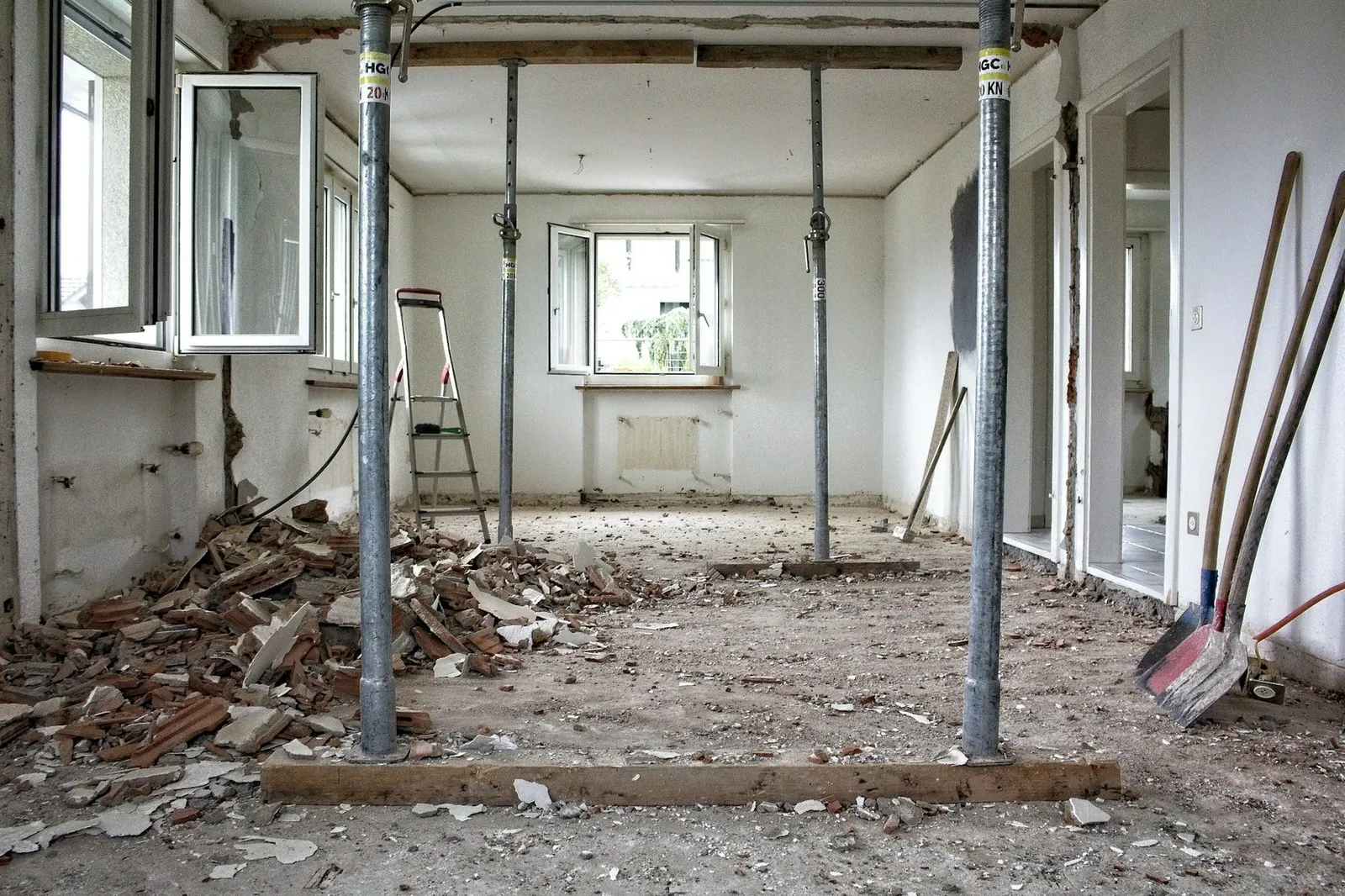
Retail strip-out in an occupied Dubai mall is a controlled soft-strip exercise, not open demolition. The unit is usually surrounded by trading shops, so the work has to be planned around mall hours, noise limits, fire safety and a pre-agreed waste route. The main lesson from cinema and retail refreshes is that the strip-out itself is rarely the problem; the constraints around it are.
How do you strip out a shop in an operating Dubai mall?
Start with the landlord’s fit-out guide and the mall’s technical team. A retail unit in an operating mall normally needs a strip-out method statement, a waste management plan, a fire watch arrangement if hot works are planned, and a programme that respects trading hours. The landlord will usually tell you which hours are available for noisy work and which hours are for quiet preparation only.
In practice, a controlled retail strip-out follows a repeatable sequence: isolate services, protect the mall frontage, remove loose fixtures and joinery, disconnect MEP, strip ceilings and partitions, then clear debris through the agreed route. Each step should be recorded, because the landlord will ask for evidence before the unit is handed back.
We treat the frontage as a hold point. If the hoarding, dust barrier or protection fails, the work stops until it is corrected. That is the difference between a strip-out that stays inside the unit and one that becomes a mall-wide problem.
What are the noise and dust limits for retail demolition in Dubai?
There is no single published number that applies to every mall. Noise and dust limits vary by landlord, master developer, free zone and the authority with jurisdiction over the building. Some malls allow breakout only between midnight and 10:00, while others restrict it to weekday mornings. Some require negative air pressure inside the unit; others accept wet cutting and dust screens.
The practical rule is to ask the mall’s fit-out office for its technical criteria before pricing. Put the noise and dust requirements into the RFQ, not into a verbal site instruction. If the mall says “no breakout before 22:00”, that changes labour, supervision and programme cost. If the mall requires dust monitoring, that is another item to price.
What matters most is that the strip-out contractor can work inside those limits without slowing the handover. A contractor who has only done closed-site demolition will often underestimate how much time is lost to quiet hours, goods-lift bookings and waste-route restrictions.
Who organises waste removal for a mall strip-out?
The strip-out contractor normally organises removal, but the mall controls the route, the timing and the type of vehicle. Most Dubai malls will not allow debris to be carried through the front-of-house during trading hours. Instead, the contractor is given a service corridor, a goods lift or a loading bay window, and the waste must be bagged, labelled and moved in that window.
That means waste removal is a coordination task, not just a haulage task. The contractor has to match the strip-out rate to the available lift and bay slots. If the strip-out team fills 40 bags by 11:00 but the next goods-lift slot is at 14:00, the unit becomes congested and the programme slips.
Ask the landlord three questions before tender: which route is available, what hours can it be used, and whether the contractor needs a separate waste permit or just a work permit. Put the answers in the RFQ.
Can a retail unit stay trading during partial strip-out?
Sometimes, but it depends on the mall and the scope. A partial strip-out can work when the unit has a clear separation between the trading area and the works area, and when the landlord accepts the risk. The usual conditions are a full-height dust barrier, independent access for workers, no shared MEP isolation, and no noisy works during trading hours.
In practice, most retail operators close the unit for the strip-out phase. The risk of dust, noise complaints or a fire alarm isolation affecting the neighbouring units is too high. Where partial trading is attempted, it works best for back-of-house areas, storage rooms or staff areas that can be sealed off completely.
If you are considering it, ask the mall’s fit-out team whether partial trading is permitted under their rules. Some landlords will not allow it at all. Others will allow it only with a specific method statement and daily inspections.
What to put in the RFQ for a mall strip-out
- Landlord fit-out guide and any strip-out technical criteria
- Permitted working hours for noisy and quiet works
- Noise and dust limits, including any monitoring required
- Waste route, goods-lift slots and loading bay windows
- Fire watch and hot works permit requirements
- Service isolation points for electrical, water and drainage
- Protection requirements for the mall frontage and common areas
- Required close-out documents: photos, waste tickets, snag list and handover certificate
How Beavcon handles this
We plan retail strip-out as a controlled sequence inside the landlord’s rules. On the VOX Cinemas works at City Centre Mirdif and City Centre Zahia, the constraint was operating cinema venues inside live shopping malls. That meant working around trading hours, protecting public areas and coordinating every movement through the mall’s service routes.
The same discipline applies to a retail unit. We isolate services before demolition starts, protect the frontage, bag and label waste, and keep a daily record of what was removed and where it went. That record becomes part of the close-out file, so the handover is not delayed by missing evidence.
For a retail strip-out in an occupied Dubai mall, the fastest way to a clean handover is a scope that names the constraints before work starts. Upload the landlord’s fit-out guide, drawings and any technical criteria through BuildScope, or request a site visit through our contact page. We will return a qualified proposal for standard packages within 48 hours as a target.
Related service: Strip-Out / Demolition.
General guidance; confirm requirements with the relevant authority or your consultant.